Cleaning Equipment for Catering Businesses: Essential Tools for Food Safety & Compliance
Maintaining high hygiene standards is critical in every professional kitchen. For catering businesses across the UK, investing in the right cleaning equipment is not just best practice — it is essential for food safety compliance.
At Cateringbase, we support catering companies with practical hygiene solutions that help meet UK food safety regulations, pass EHO inspections, and maintain a professional kitchen environment.
Why Cleaning Equipment Is Essential in Catering
In commercial catering operations, cleaning is continuous — before, during, and after service.
Proper cleaning equipment helps:
- Prevent cross-contamination
- Reduce bacteria and virus spread
- Maintain food hygiene standards
- Protect staff and customers
- Comply with HACCP procedures
Environmental Health Officers (EHOs) expect to see clear, structured cleaning systems in place.
Essential Cleaning Equipment for Commercial Catering Kitchens
Every catering business should have a structured set of professional cleaning tools.
1. Colour Coded Cleaning Equipment
Colour coding is widely used in UK catering to prevent cross-contamination.
Common colour coding systems include:
- 🔴 Red – Toilets and washrooms
- 🔵 Blue – General low-risk areas
- 🟢 Green – Food preparation areas
- 🟡 Yellow – Wash basins and sinks
Colour coded:
- Mops
- Buckets
- Cloths
- Brushes
- Spray bottles
help reduce contamination risks between kitchen zones.
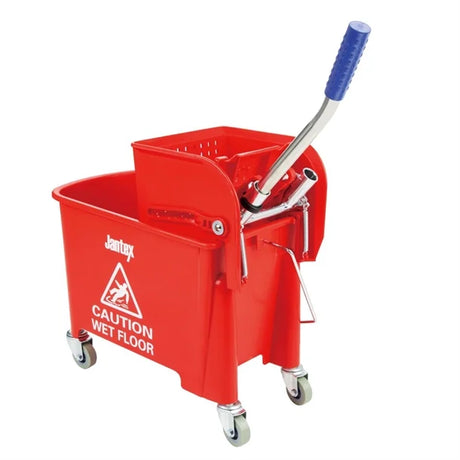
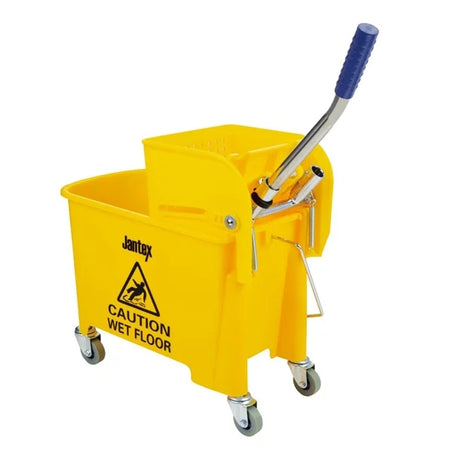
2. Mop Buckets with Wringer Systems
Commercial mop buckets are designed for:
- Efficient floor cleaning
- Reduced manual strain
- Improved hygiene
- Controlled water usage
Many catering businesses use dual-compartment mop systems to separate clean and dirty water.
3. Cleaning Trolleys for Catering Operations
A professional cleaning trolley allows staff to:
- Organise chemicals and cloths
- Transport cleaning supplies safely
- Maintain separation between zones
- Improve efficiency during busy shifts
This is especially useful in contract catering and large event venues.
4. Food-Safe Cleaning Chemicals
Cleaning chemicals used in catering must be:
- Food-safe
- Clearly labelled
- COSHH compliant
- Stored securely
Proper chemical management is part of food safety compliance.
5. Wet Floor Safety Signs
Slip hazards are a major risk in commercial kitchens.
Wet floor signs:
- Protect staff and customers
- Reduce accident liability
- Demonstrate health & safety compliance
They are a basic but essential piece of catering cleaning equipment.
Cleaning Equipment and HACCP Compliance
Under UK food hygiene law, catering businesses must operate a documented food safety management system (HACCP).
Cleaning equipment supports HACCP by:
- Controlling contamination hazards
- Reducing microbial growth
- Supporting cleaning schedules
- Providing evidence during inspections
A well-organised cleaning station reflects a well-managed catering operation.
Best Practices for Catering Cleaning Systems
To maintain high hygiene standards:
- Implement a documented cleaning schedule
- Train staff on colour coding procedures
- Store cleaning equipment away from food
- Replace worn or damaged tools immediately
- Conduct regular hygiene audits
Consistency and accountability are key.
Benefits of Professional Cleaning Equipment in Catering
Investing in quality cleaning tools provides:
- Better inspection results
- Improved staff productivity
- Reduced cross-contamination risk
- Lower long-term replacement costs
- Stronger brand reputation
Clean kitchens build customer confidence.
Why Cateringbase Supports Structured Hygiene Systems
At Cateringbase, we understand the operational challenges facing UK catering businesses.
Our goal is to help catering professionals:
- Improve hygiene standards
- Stay compliant with UK regulations
- Reduce operational risks
- Maintain professional kitchen environments
Cleaning equipment is not just a purchase — it is part of your food safety system.